

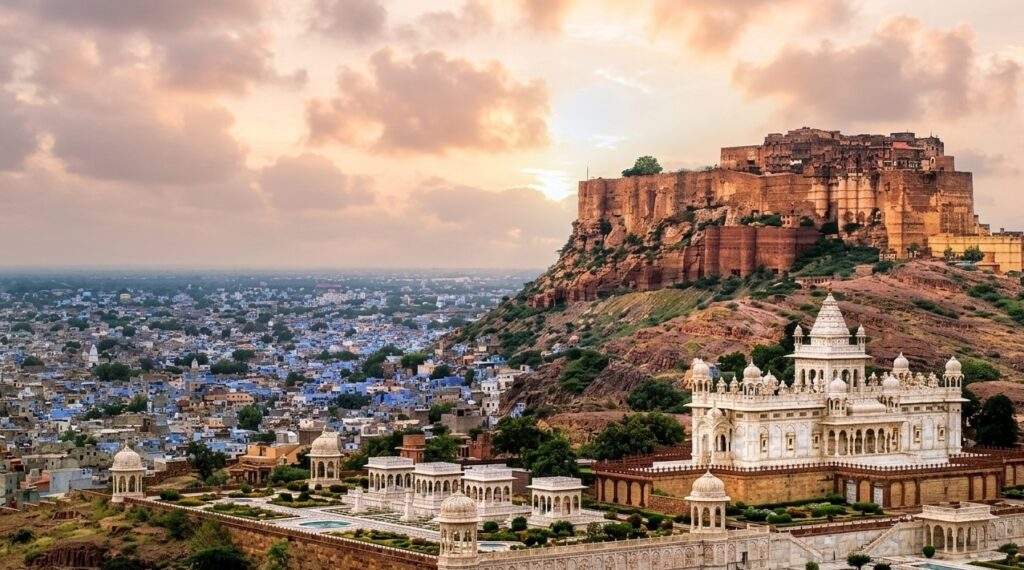
Jodhpur, Rajasthan’s famed “Blue City”, is a mesmerizing labyrinth of cobalt-hued alleys, bustling bazaars, and towering architecture. While the modern outer city continues to expand, the beating heart of Jodhpur’s heritage remains tightly enclosed within the 16th-century old city walls.
Stepping into the old city feels like walking through a living museum. Below is a curated guide to the absolute best places to visit inside Jodhpur’s old quarters, along with the rich cultural features that make each spot truly unforgettable.
1. Mehrangarh Fort: The Citadel of the Sun
Perched on a sheer cliff 400 feet above the skyline, Mehrangarh Fort is the crown jewel of Jodhpur. Founded in 1459 by Rao Jodha, this massive fortress is one of the largest and most well-preserved forts in all of India.
- Cultural Features: Mehrangarh is the ultimate symbol of Marwari Rajput valour and artistic brilliance. As you cross its towering gates (some still bearing the scars of historic cannonball hits), you enter a world of opulent palaces like the Moti Mahal (Pearl Palace) and Phool Mahal (Flower Palace). The fort museum houses an incredible collection of royal palanquins, weaponry, and miniature paintings. Look out for the traditional folk musicians playing the Kamayacha and Sarangi at the courtyards, filling the stone corridors with hauntingly beautiful desert melodies.
2. Ghanta Ghar (The Clock Tower) & Sardar Market
Right at the center of the old city sits Ghanta Ghar, a majestic clock tower built by Maharaja Sardar Singh in the early 20th century. It serves as the landmark anchor for the sprawling, chaotic, and vibrant Sardar Market.
- Cultural Features: This is the sensory epicentre of Jodhpur’s daily life. The market is a treasure trove of traditional Marwari craftsmanship. Here, you can witness the bustling trade of hand-dyed Bandhani (tie-dye) textiles, authentic Rajasthani Mojris (leather shoes), local lac bangles, and aromatic spices like the famous Mathania red chili. The marketplace is also the best spot to sample legendary Jodhpuri street food, including Pyaaz Kachori and the sweet, rich Makhaniya Lassi.
3. Toorji Ka Jhalra (The Stepwell)
Tucked away in the narrow lanes near the clock tower, Toorji Ka Jhalra is an architectural marvel from the 1740s. Built by a Queen-Consort of Maharaja Abhai Singh, this stepwell was submerged and neglected for decades before being beautifully restored to its former glory.
- Cultural Features: In the arid desert climate of Rajasthan, stepwells were more than just water reservoirs; they were vibrant social hubs and sacred architectural monuments. Toorji Ka Jhalra features exquisite carvings of dancing elephants, medieval deities, and intricately symmetrical staircases. Today, it has undergone a modern cultural renaissance. The stepwell area is lined with chic heritage cafes and handicraft boutiques, making it a popular spot where local youth and global travelers mingle against a stunning historic backdrop.
4. Jaswant Thada: The Marble Cenotaph
Located just a short walk up the hill from the old city walls, Jaswant Thada is a peaceful oasis away from the urban bustle. Built in 1899, this spectacular white marble cenotaph was constructed in memory of Maharaja Jaswant Singh II.
- Cultural Features: Often described as the “Taj Mahal of Marwar,” Jaswant Thada highlights the royal funerary traditions of the Rajput clans. Built out of extremely thin, polished sheets of Makrana marble, the monument glows with a warm, translucent golden hue when hit by the sun. The complex features a tiered garden, a serene lakeside, and beautifully carved gazebos. It serves as a cremation ground for the Jodhpur royal family and houses portraits of past rulers, offering a quiet, respectful space to reflect on the city’s lineage.
5. Navchokiya: The True “Blue” Neighborhood
If you want to experience the postcard-perfect lanes you see in travel documentaries, head straight to Navchokiya, a historic neighborhood located at the foot of the fort’s rear side.
- Cultural Features: Navchokiya is where Jodhpur truly earns its title as the Blue City. Historically, the local Brahmins (the priestly caste) painted their homes indigo to signify their status and to keep the houses cool during scorching desert summers. Walking through Navchokiya offers an authentic glimpse into traditional community living. You will walk past intricately carved wooden doors (jharokhas), encounter elderly locals chatting on stone porches, and find vibrant street murals depicting Hindu mythology.
Tips for Exploring the Jodhpur Old City
Catch the Sunset: Make sure to head to a rooftop cafe in the old city by 5:30 PM. Watching the setting sun cast a golden glow over the blue houses and the looming fort is a magical experience.
Ditch the Cars: The lanes of the old city are incredibly narrow. Auto-rickshaws, two-wheelers, or your own two feet are the only way to get around.
Look Up: Jodhpur’s vernacular architecture is stunning. Even ordinary homes boast beautiful sandstone carvings and historic brackets.