

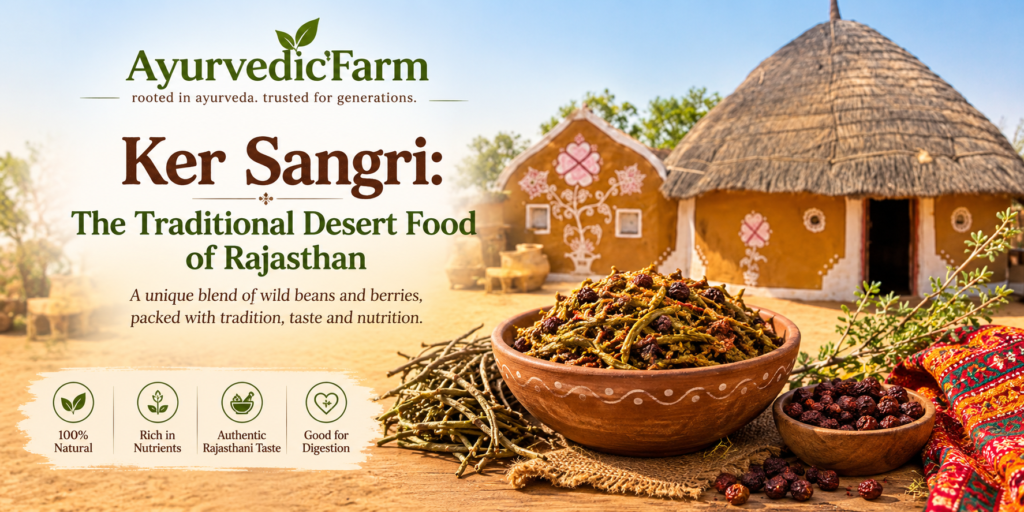
Meta Title: Ker Sangri: The Traditional Desert Food of Rajasthan | AyurvedicFarm
Meta Description: Discover Ker Sangri, a traditional Rajasthani desert delicacy made from ker berries and sangri pods, and learn about its history, preparation, and cultural importance.
Ker Sangri: A Taste of Rajasthan’s Desert Heritage
Rajasthan is famous for its vibrant culture, royal history, colorful traditions, and unique cuisine. But perhaps one of the most fascinating aspects of Rajasthani food is how it evolved to thrive in the harsh desert environment.
One such traditional dish is Ker Sangri—a rustic and flavorful preparation made from two naturally occurring desert foods: ker berries and sangri pods.
For generations, Ker Sangri has been prepared in homes across Rajasthan. It represents the ingenuity of desert communities, who learned to turn hardy local plants into delicious and long-lasting foods.


What Is Ker Sangri?
Ker is a small, tangy desert berry that grows naturally in the arid regions of Rajasthan. Sangri refers to the long, slender pods of the khejri tree, a tree deeply associated with Rajasthan’s desert landscape.
Both ingredients can be dried and stored for long periods. This made them particularly valuable in traditional desert kitchens, where fresh vegetables were not always readily available.
When cooked with spices and oil, ker and sangri create a distinctive dish with a combination of tangy, earthy, spicy and slightly nutty flavors.
Why Is Ker Sangri Important in Rajasthani Cuisine?
Traditional Rajasthani cuisine developed around the realities of the desert.
Water is scarce, rainfall can be unpredictable, and many common vegetables are difficult to grow in arid conditions. Local communities therefore developed culinary traditions based on ingredients that could survive the climate and be preserved for later use.
Ker and sangri fit naturally into this food culture.
Their ability to be dried and stored helped families maintain a supply of vegetables throughout the year. Over time, Ker Sangri became more than just a practical food—it became an important part of Rajasthan’s culinary heritage.
How Is Traditional Ker Sangri Prepared?
Preparing Ker Sangri traditionally requires a little patience.
1. Cleaning and soaking
Dried ker and sangri are carefully cleaned to remove dust and unwanted material. They are then soaked in water, often for several hours, to soften them.
2. Boiling
The soaked ingredients are generally boiled until they become tender.
3. Tempering with spices
The cooked ker and sangri are then prepared with ingredients commonly found in Rajasthani kitchens, such as:
- Mustard oil
- Cumin
- Asafoetida (hing)
- Red chilli
- Turmeric
- Coriander
- Amchur or other souring ingredients
- Salt
The exact recipe varies from family to family and region to region.
4. Slow cooking
The ingredients are cooked together so that the spices coat the ker and sangri and develop their characteristic rich flavor.
The result is a wonderfully aromatic dish that pairs beautifully with bajra roti, chapati or other traditional Indian breads.
The Unique Flavor of Ker Sangri
Ker Sangri is unlike many everyday vegetable dishes.
Ker contributes a distinctive tangy character, while sangri provides a slightly chewy and earthy texture. The use of traditional spices and mustard oil gives the dish its unmistakable Rajasthani identity.
It is a dish where simple ingredients create a surprisingly complex flavor.
A Food Shaped by the Desert
One of the most interesting things about Ker Sangri is that it tells a story about Rajasthan’s relationship with its environment.
The khejri tree, from which sangri comes, has long been important to communities in the Thar region. It provides food and other useful resources while being well adapted to dry conditions.
This connection between food, landscape and traditional knowledge is what makes Ker Sangri more than just another regional recipe.
It is a reflection of Rajasthan’s ability to transform the resources of the desert into nourishing and flavorful food.
Ker Sangri and Traditional Rajasthani Meals
Ker Sangri is commonly enjoyed as part of a larger traditional meal. It can be served alongside:
- Bajra roti
- Dal
- Ghee
- Churma
- Papad
- Garlic chutney
- Buttermilk
A combination of hot bajra roti, ghee and spicy Ker Sangri offers a wonderful example of traditional Rajasthani comfort food.
Traditional Food With a Modern Appeal
Today, interest in traditional Indian foods is growing as people look for regional ingredients, traditional recipes and foods connected to local agricultural practices.
Ker Sangri fits naturally into this movement.
It uses locally adapted ingredients and traditional preservation techniques, while offering a distinctive taste that is difficult to find in modern vegetable dishes.
For those interested in exploring India’s regional food heritage, Ker Sangri is an excellent place to begin.
Experience the Flavors of Rajasthan with AyurvedicFarm
At AyurvedicFarm, we believe traditional foods carry stories that deserve to be preserved.
From Rajasthan’s desert landscapes to its traditional kitchens, ingredients such as ker and sangri represent generations of knowledge about local food and natural resources.
Ker Sangri is not simply a dish—it is a taste of Rajasthan’s desert heritage.
The next time you want to experience something authentically Rajasthani, try a traditional bowl of Ker Sangri with warm bajra roti and a little ghee. You may discover why this humble desert food has remained part of Rajasthan’s culinary tradition for generations.